Suya
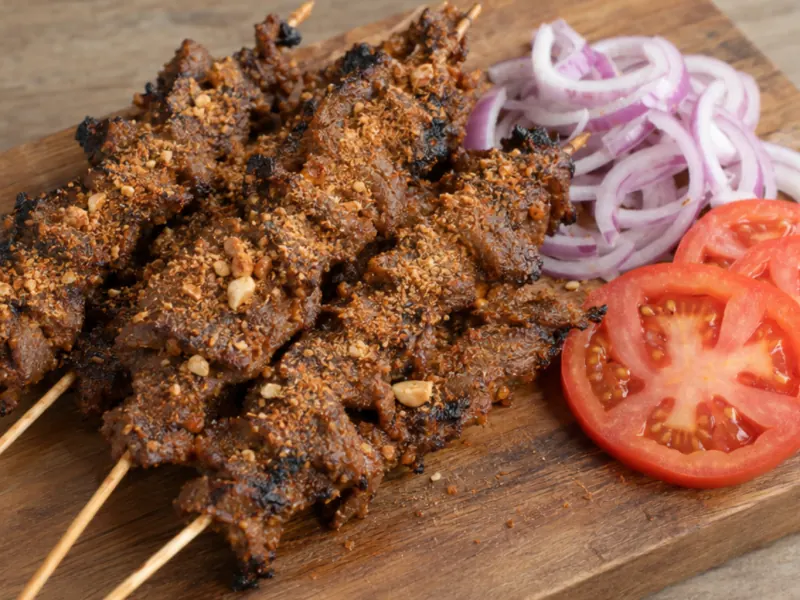
Suya (SOO-yah) is thinly sliced beef coated in yaji, a ground peanut and chilli spice mix, then grilled quickly on skewers over high heat. This version firms the beef in the freezer so it slices thinly and neatly. The beef then rests in the dry rub for an hour so the coating holds on the grill.
- Total2 h 10 min
- Servings4
- DifficultyMedium
Ingredients
yaji
to serve
Method
Firm and slice the beef
Wrap the beef and freeze it for about 30 minutes, until firm but not frozen solid. Slice it across the grain into strips about ¼ in (0.5 cm) thick, then flatten any thicker pieces with the heel of your hand.
Look for: The beef feels stiff at the edges and the knife glides through without tearing the meat.
Make the yaji
Put the peanuts, cayenne, ginger, onion powder and salt in a food processor or spice grinder; if using a spice grinder, work in two batches. Pulse in short bursts, scraping down the sides, until the mixture looks like fine, dry sand.
Look for: The yaji looks like fine, dry sand and stays loose when pinched; stop before it clumps or turns glossy.
Coat the beef
Set aside about a quarter of the yaji for serving. Toss the beef with 1 tbsp of the oil, then press the remaining yaji onto every strip until it is evenly coated.
Look for: Each strip has an even, reddish-tan crust with no bare patches.
Rest in the fridge
Cover the coated beef and refrigerate it for 1 hour so the rub draws a little moisture from the meat and sticks to it. If you are using wooden skewers, soak them in water for the same hour.
Look for: The coating looks slightly damp and no longer dusty.
Thread the skewers
Divide the beef between about 8–10 skewers, 10 in (25 cm)–12 in (30 cm) long, weaving several strips onto each in a loose ribbon and leaving small gaps between the pieces. Heat a charcoal or gas grill, or a ridged grill pan, to very high heat.
Look for: You can hold your hand above the grill grate for only 1–2 seconds.
Oil and grill
Brush the skewers with the remaining oil. Grill them for 3–4 minutes per side, turning once, until the peanut coating turns deep brown, the edges char and no red juices show when you cut into a piece. If any piece is thicker than the rest, it should read at least 145 °F (63 °C).
Look for: The coating is deep brown with charred edges, a cut piece shows no red juices, and any thicker piece reads at least 145 °F (63 °C).
Rest and serve
Rest the skewers for 3 minutes, then sprinkle them with the reserved yaji. Serve with the sliced onion and tomatoes on the side.
Why this works
- Slicing the beef to about half a centimetre lets it cook through in 6–8 minutes over high heat, before the peanut coating has a chance to burn.
- Using about 100 g of peanuts to 700 g of beef gives a thick crust without a pasty layer. The oil helps the rub cling and brown rather than fall off in dry flakes.
- Here the yaji is treated as a dry rub with a 1-hour rest. Some cooks call it a marinade and leave it longer, but an hour is enough for the salt to draw out a little moisture so the coating sticks.
- Reserving part of the yaji uncooked gives the finished skewers a second layer of raw, nutty heat that the grilled crust doesn't have.
Common mistakes
- Grinding the peanuts too long turns them into peanut butter. Pulse briefly, and stop as soon as the mix looks like fine, dry sand.
- Packing the strips tightly onto the skewers makes them steam instead of char. Leave small gaps between the pieces and keep the grill very hot.
- Thick slices burn on the outside before the centre is done. Firm the beef in the freezer first so you can slice it thinly and evenly.
Swaps
- roasted unsalted peanuts → kuli-kuli (Nigerian peanut cake), finely ground. Kuli-kuli is the traditional base and is drier because the oil has been pressed out. Look for it in African grocers, and add a little extra oil to the beef if you use it.
- beef sirloin or flank steak → boneless chicken thighs or lamb leg steaks. Slice them just as thinly. Cook chicken until no pink remains and it reaches 74°C (165°F); cook lamb to 63°C (145°F).
- cayenne pepper → dried red chillies, ground. Toast whole dried chillies briefly in a dry pan, then grind them with the peanuts. Start with less if they are hot.
- peanut oil or vegetable oil → canola (rapeseed) or sunflower oil. Use one of these if you want to avoid peanut oil; note that the yaji itself still contains peanuts.
Storage
Refrigerate cooked suya in an airtight container for up to 3 days. Reheat it briefly in a very hot dry pan or under the grill, just until warm, to avoid toughening the beef. Store leftover yaji in a sealed jar in the fridge for up to 1 month; the ground peanuts go rancid quickly at room temperature.
Scaling
Scale the yaji in proportion to the beef. When doubling, grill in batches so the skewers don't crowd the grate, and let the grill reheat between batches. Cooking times per side stay the same.
Make ahead
Make the yaji up to a week ahead for the freshest flavour and keep it in the fridge; leftovers keep for up to a month. You can slice and coat the beef up to 12 hours ahead; keep it covered in the fridge and thread it onto skewers just before grilling.
Nutrition per serving
- Calories
- 625 kcal
- Protein
- 43 g
- Carbohydrates
- 14 g
- Sugars
- 5 g
- Fibre
- 4 g
- Fat
- 45 g
- Saturated fat
- 12.7 g
- Sodium
- 970 mg
Estimated from the raw ingredients using USDA FoodData Central values; actual values vary with brands and portion size.
Contains
- Peanuts
Derived from the ingredient list. Always check the labels of the products you buy. Gluten-free only if every product you use is certified gluten-free; cross-contact is common in oats, spices and stock. Allergens and health
Questions
Can suya be made without a grill?
Yes. Cook the skewers on a rack under a very hot oven grill (broiler), close to the element, for 3–4 minutes per side, or use a smoking-hot ridged grill pan. Watch closely, because the peanut coating can burn quickly.
Why did the coating fall off on the grill?
Usually the beef wasn't oiled before the rub went on, or it didn't rest long enough to turn slightly tacky. Grill grates that aren't hot enough also make the coating stick to the metal and tear away.
Are wooden or metal skewers better?
Either works. Flat metal skewers stop the strips from spinning when you turn them. Wooden skewers need about an hour of soaking so they don't burn.
Cook next
Published November 20, 2026 · Updated · Published by Recipe Worldwide · How we make recipes