Main dishesPersian
Fesenjan
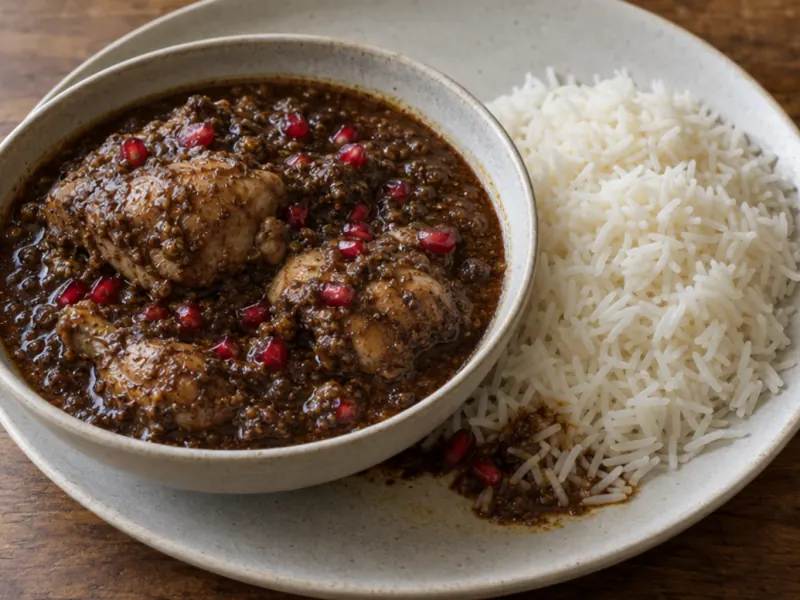
Fesenjan (feh-sen-JAHN) is often made with duck in northern Iran, but chicken is the most common choice today. This version uses bone-in thighs, which stay moist through more than an hour of simmering. Cooking the ground walnuts in water for half an hour before the molasses goes in softens them and starts drawing out their oil.
- Total2 h 42 min
- Servings6
- DifficultyMedium
Ingredients
Method
Toast and grind the walnuts
Toast the walnuts in a large heavy pot over medium-low heat, stirring often, for 4–5 minutes. Tip them onto a plate to cool, then pulse in a food processor until they form a fine, slightly damp meal, stopping before it turns to paste.
Look for: Walnuts smell toasty and darken a shade; the ground meal clumps when pressed.
Brown the chicken
Season the chicken with ¾ tsp of salt and the pepper. Heat the oil in the same pot over medium-high heat and brown the chicken in two batches, 3–4 minutes per side, then set it aside on a plate.
Look for: Golden patches on both sides; the chicken releases easily from the pot.
Cook the onions
Lower the heat to medium, add the onions to the fat in the pot and cook, stirring and scraping up the browned bits, until soft and golden. Stir in the turmeric and cinnamon (if using) for 30 seconds.
Look for: Onions are deep golden at the edges and the spices smell fragrant.
Simmer the walnut base
Add the ground walnuts and stir for 2 minutes, then pour in 3¾ cups (900 ml) of the water and bring to a boil, keeping the rest of the water aside. Reduce to a gentle simmer and cook, partly covered, for about 30 minutes, stirring every few minutes so nothing sticks to the base.
Look for: The sauce thickens to a light porridge and small beads of walnut oil appear on the surface.
Add pomegranate and chicken
Stir in the pomegranate molasses and the remaining salt, then return the chicken and any juices to the pot, pressing it down into the sauce. Cover and simmer on low for about 1 hour, stirring and scraping the bottom every 10–15 minutes.
Look for: The sauce darkens from tan to chocolate brown and a layer of oil gathers at the edges.
Check the chicken
Test the thickest thigh with a thermometer held away from the bone; it must reach at least 165 °F (74 °C). After the full simmer the thighs will usually be a little past this point, which is when the meat pulls easily from the bone.
Look for: Thermometer reads the safe temperature or higher; the meat pulls away from the bone easily with a fork and the juices run clear.
Balance sweet and sour
Taste the sauce. If it is too sour for you, stir in the sugar a little at a time; if it is too thick, heat the reserved water and loosen the sauce with a little of it. Simmer uncovered for another 10 minutes.
Look for: Sauce coats the back of a spoon thickly and tastes tart first, then gently sweet.
Rest and serve
Take the pot off the heat and let it stand for 10 minutes. Spoon the chicken and sauce over the rice and scatter with pomegranate seeds, if using.
Look for: Oil settles in a glossy sheen over the dark sauce.
Why this works
- Simmering the walnuts in water on their own for 30 minutes gives them time to soften and release their oil before the thicker, stickier molasses goes in, which also makes the base less likely to scorch. The deep brown colour comes from the pomegranate and the long simmer that follows.
- Bone-in thighs hold up to over an hour of simmering, while breast meat dries out and turns stringy in the same time.
- Pomegranate molasses varies widely in sourness between brands, so the 150 ml here is a starting point and the sugar is optional, added only after tasting.
- Toasting the walnuts first adds a roasted depth and softens their raw edge.
Common mistakes
- Letting the sauce catch on the bottom: ground walnuts sink and scorch easily, so keep the heat low and scrape the base every 10–15 minutes.
- Grinding the walnuts into butter: stop the processor at a fine, damp crumb, or the sauce turns pasty and greasy rather than thick and glossy.
- Serving too soon: if the sauce is still light brown with no visible oil, it needs more time on a low simmer.
Swaps
- pomegranate molasses → reduced pomegranate juice. Boil 600 ml unsweetened pomegranate juice until it is reduced to about a quarter of its volume and syrupy; it will be less tart, so you will likely skip the sugar.
- bone-in skinless chicken thighs → duck legs. The older northern style uses duck. Brown the legs skin-side down to render fat, pour most of it off, and simmer about 30 minutes longer, skimming fat from the surface.
- walnut halves → part almonds. Up to a third of the walnuts can be replaced with blanched almonds; the sauce will be paler and less oily.
- granulated sugar → date syrup. Adds sweetness with a darker, caramel note; add a teaspoon at a time.
Storage
Cool within 2 hours and refrigerate in a covered container for up to 4 days; the sauce thickens and the flavour deepens overnight. Freeze for up to 3 months and thaw in the fridge. Reheat gently in a pot with a splash of water, stirring often, until steaming hot throughout.
Scaling
When doubling, use a pot roughly twice as wide so the walnut sauce reduces at a similar rate, brown the chicken in more batches, and expect the first walnut simmer to take 10–15 minutes longer. Halve everything for 3 servings in a smaller pot, watching closely for sticking since the shallower sauce catches faster.
Make ahead
Toast and grind the walnuts up to 3 days ahead and keep them airtight in the fridge. The whole stew can be made a day ahead and reheated; it is often better the next day.
Nutrition per serving
Nutrition is not shown because it could not be calculated reliably from the ingredients.
Contains
- Tree nuts
- Soy
Derived from the ingredient list. Always check the labels of the products you buy. Allergens and health
Questions
Why is my fesenjan pale instead of dark brown?
Usually it has not simmered long enough; the colour comes from the pomegranate molasses darkening with the walnuts over a long, gentle cook. Keep it at a low bubble with the lid ajar for another 20–30 minutes and it will deepen.
Is fesenjan supposed to be sweet or sour?
Both styles exist: versions from northern Iran are tart, while others are noticeably sweeter. Adjust with sugar at the end to the balance you prefer.
Can I use boneless chicken thighs?
Yes. Brown them briefly and simmer them in the sauce for 35–40 minutes instead of an hour so they stay tender.
Cook next

Published November 20, 2026 · Updated · Published by Recipe Worldwide · How we make recipes