Main dishesFilipino
Chicken Afritada
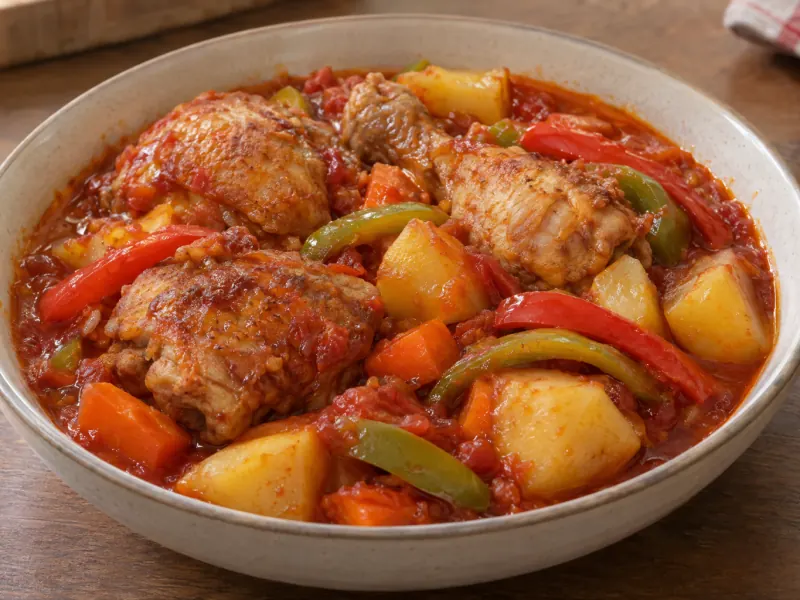
Chicken afritada (ah-free-TAH-dah) is a Filipino tomato-sauce stew of chicken, potatoes, carrots and bell peppers. This version browns bone-in pieces first, then adds the vegetables in stages so the potatoes hold their shape and the peppers stay bright.
- Total1 h 35 min
- Servings6
- DifficultyEasy
Ingredients
Method
Season the chicken
Toss the chicken with half the fish sauce (1 tbsp) and the pepper in a bowl. Leave it for 15 minutes while you prepare the vegetables; this time overlaps with the prep time.
Brown the chicken
Heat the oil over medium-high heat in a wide, heavy pot of at least 5½ qt (5 l) or a 12 in (30 cm) deep frying pan. Lift the chicken out of any liquid and brown it in 2–3 batches without crowding, starting skin side down, 4–5 minutes per side, turning once; set aside on a plate.
Look for: The skin is deep golden and releases easily from the pan.
Soften the aromatics
Pour off excess fat, leaving a thin film in the pot, and lower the heat to medium. Cook the onion for 3–4 minutes, then add the garlic and stir for about 1 minute.
Look for: The onion is soft and translucent and the garlic smells fragrant without browning.
Cook the tomato sauce
Pour in the tomato sauce, scraping up the browned bits from the bottom of the pot, and let it bubble for 2 minutes.
Look for: The sauce darkens slightly and loses its raw tomato smell.
Simmer the chicken
Add the stock, the remaining fish sauce and the bay leaves, then return the chicken and any juices to the pot. Bring back to a boil, which takes about 3 minutes, then cover and simmer over low heat for 20 minutes.
Look for: The sauce bubbles gently at the edges, not at a hard boil.
Add potatoes and carrots
Tuck the potatoes and carrots into the sauce around the chicken, cover, and simmer for 20 minutes more, stirring once. The chicken is done when the thickest piece reads at least 165 °F (74 °C) near the bone; bone-in thighs turn fully tender a little above that, which this simmer normally reaches.
Look for: A fork slides into the potatoes and carrots with little resistance and the chicken pulls easily from the bone.
Add the peppers
Stir in the red pepper, green pepper and peas, if using. Simmer uncovered for 5 minutes so the sauce reduces a little.
Look for: The peppers are just tender but still bright, and the sauce coats the back of a spoon.
Adjust and serve
Remove the bay leaves. Taste the sauce and add salt if needed, and the sugar if the tomato tastes sharp; serve hot.
Why this works
- Browning the chicken first gives the tomato sauce a deeper, savoury base and renders some fat from the skin; the name afritada comes from the Spanish fritada, meaning fried.
- Giving the bone-in chicken a 20-minute head start before the potatoes and carrots go in means everything finishes together, so the potatoes stay in whole chunks instead of breaking into the sauce.
- The bell peppers go in for only the last 5 minutes so they keep their colour and a little bite rather than turning dull and soft.
- Fish sauce added in two stages seasons the chicken itself and then the sauce; using low-sodium or reduced-salt stock keeps the final salt level under control.
Common mistakes
- Thin, watery sauce: crowding the pot while browning steams the chicken and releases liquid. Brown in 2–3 batches, and if the sauce is still loose at the end, simmer uncovered a few extra minutes.
- Mushy potatoes: floury potatoes such as Russets or Maris Pipers cut small will collapse. Use all-purpose or waxy potatoes in large chunks and add them only after the chicken's first simmer.
- Using ketchup by mistake: in the UK and Australia, bottled 'tomato sauce' means ketchup, which makes the stew far too sweet. Use canned tomato sauce or plain passata.
Swaps
- canned tomato sauce (not ketchup) or passata → passata, or blended canned tomatoes. Passata is the closest match in the UK and Australia; blended canned tomatoes may need an extra 5 minutes uncovered to thicken.
- fish sauce → soy sauce. Use the same amount; the sauce will be slightly darker and less funky.
- bone-in, skin-on chicken thighs and drumsticks → pork shoulder in large cubes. This makes pork afritada; simmer the pork for 45–60 minutes until tender before adding the potatoes and carrots.
- low-sodium or reduced-salt chicken stock → water plus half a chicken stock cube. Stock cubes are salty, so taste before adding any salt at the end.
Storage
Cool and refrigerate in a covered container for up to 3 days. It freezes for up to 3 months, though the potatoes turn slightly grainy. Thaw in the fridge and reheat gently in a covered pan with a splash of water until steaming hot throughout and the chicken reaches 74°C (165°F).
Scaling
To double, double every ingredient except the stock, which goes up only one and a half times (about 375 ml), because a fuller pot loses less liquid. Use a large wide braiser of 7–8 litres or two pans, and allow about 20 extra minutes to brown the chicken in 4–5 batches; the simmering times stay the same. To halve, halve everything, use a 3-litre pot or 24 cm frying pan, brown in one or two batches and keep the same 20-minute stages.
Make ahead
The stew tastes good the next day as the sauce settles into the chicken. Make it up to the end of step 6, cool and refrigerate, then reheat and add the peppers just before serving so they stay bright.
Nutrition per serving
- Calories
- 705 kcal
- Protein
- 44 g
- Carbohydrates
- 28 g
- Sugars
- 8 g
- Fibre
- 5 g
- Fat
- 46 g
- Saturated fat
- 11.7 g
- Sodium
- 1030 mg
Estimated from the raw ingredients using USDA FoodData Central values; actual values vary with brands and portion size. Salt added to taste is not included.
Contains
- Soy
- Fish
- Celery
Derived from the ingredient list. Always check the labels of the products you buy. Allergens and health
Questions
Can I use boneless chicken thighs?
Yes. Cut them into large pieces, brown them briefly, and shorten the first simmer to about 10 minutes before adding the potatoes and carrots. Breast meat dries out easily in this stew, so thighs are the better choice.
How is afritada different from menudo and caldereta?
All three are Filipino tomato-based stews. Menudo is usually made with small diced pork and often liver, and caldereta is typically beef or goat with liver spread and chilli; afritada is the plainest of the three, with large pieces of meat, potatoes, carrots and peppers.
Why is my sauce sour?
Canned tomato sauces vary in acidity, and a short simmer leaves the sauce sharp. Make sure it bubbles for the full time in step 4, then balance it with the optional sugar at the end.
Cook next
Published November 20, 2026 · Updated · Published by Recipe Worldwide · How we make recipes