Varenyky
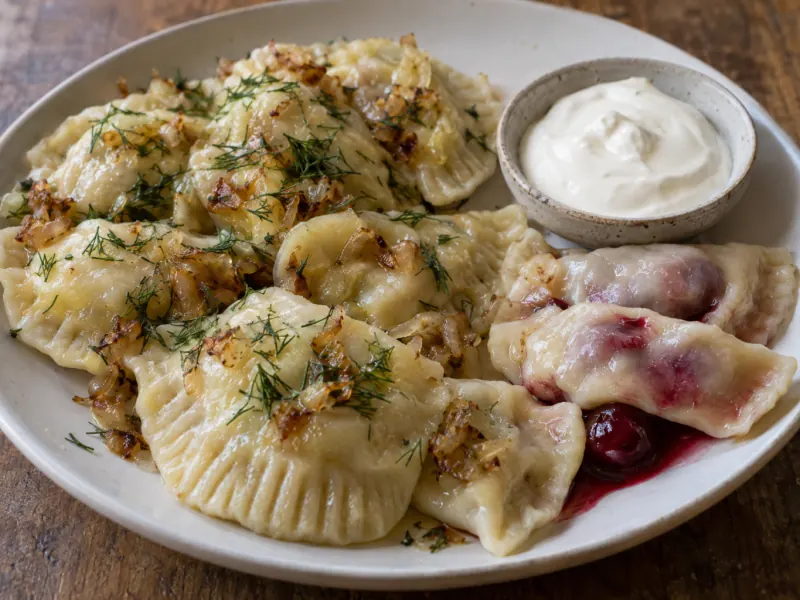
Varenyky (vah-REH-nih-kih) are Ukrainian boiled dumplings made from a plain flour-and-water dough, here split between two fillings: mashed potato with butter-fried onion, and sweet farmer's cheese with sour cherries. A little oil keeps the dough supple enough to roll thin. Draining the sugared cherries well keeps the seams from bursting.
- Total3 h 15 min
- Servings6
- DifficultyMedium
Ingredients
dough
potato filling
cherry and cheese filling
to cook and serve
Method
Make the dough
Mix the flour and salt in a large bowl, then add the warm water and oil and stir into a shaggy dough. Knead on a work surface for 8–10 minutes, then cover with the upturned bowl and rest for 30 minutes.
Look for: Smooth, soft and springs back slowly when pressed; not sticky.
Drain the cherries
Toss the cherries with 3 tbsp (36 g) and tip them into a sieve set over a bowl. Leave to drain while the dough rests, then keep the juice for serving.
Look for: Cherries look glossy and are no longer sitting in liquid.
Boil the potatoes
Cover the potatoes with cold water (6½ cups (1.5 l)), add ⅓ tbsp, bring to the boil, then simmer for 15–20 minutes. Drain well and let them steam dry in the pot for a couple of minutes.
Look for: A knife slides into the largest chunk with no resistance.
Fry the onion
Melt 2 tbsp (30 g) in a frying pan over medium heat and add the onion. After 3–4 minutes, turn the heat down to medium-low and keep cooking, stirring often, for a further 10–12 minutes so the butter does not burn before the onion colours.
Look for: Soft and deep golden, with some darker edges; the butter is nutty brown, not black.
Finish the potato filling
Mash the potatoes until smooth, then mix in half the fried onion along with its butter. Season generously with salt and pepper and let cool; set the remaining onion aside for serving.
Look for: Thick enough to hold a mound on a spoon and cool enough to touch.
Make the cheese filling
Press the cheese through a sieve or mash it hard with a fork, then mix in 2 tbsp (24 g) and the egg yolk.
Look for: Fairly smooth and thick, with no large curds.
Roll and cut
Dust the work surface with some of the extra flour and roll half the dough out very thin, keeping the other half covered. Cut out circles with a 3 in (7 cm) cutter or glass, and gather and re-roll the scraps once.
Look for: The dough is thin enough that the work surface shows faintly through it.
Fill
Put a heaped teaspoon of potato filling in the centre of half the circles. On the rest, put a teaspoon of cheese filling topped with one or two cherries (about ¼ oz (5 g) per dumpling), so the drained cherries stretch across all the sweet ones.
Look for: A clean margin of dough is left all round each mound of filling.
Seal
Fold each circle into a half-moon, press out the air and pinch the edges firmly; crimp the sweet ones with a fork so you can tell them apart. Set them on a tray dusted with the remaining flour.
Look for: Edges are sealed with no filling or juice on the seam.
Repeat with the second half
Roll, cut, fill and seal the second half of the dough the same way, keeping the finished varenyky covered with a cloth so they do not dry out.
Boil
Bring 3½ qt (3.5 l) to a rolling boil with ⅔ tbsp. Add the varenyky in batches of about a dozen (7–8 batches in all) and stir gently once so they don't stick; after they float, simmer 3–4 minutes for potato and 2–3 minutes for cherry.
Look for: They float, and the thick pinched edge is tender when bitten.
Dress and serve
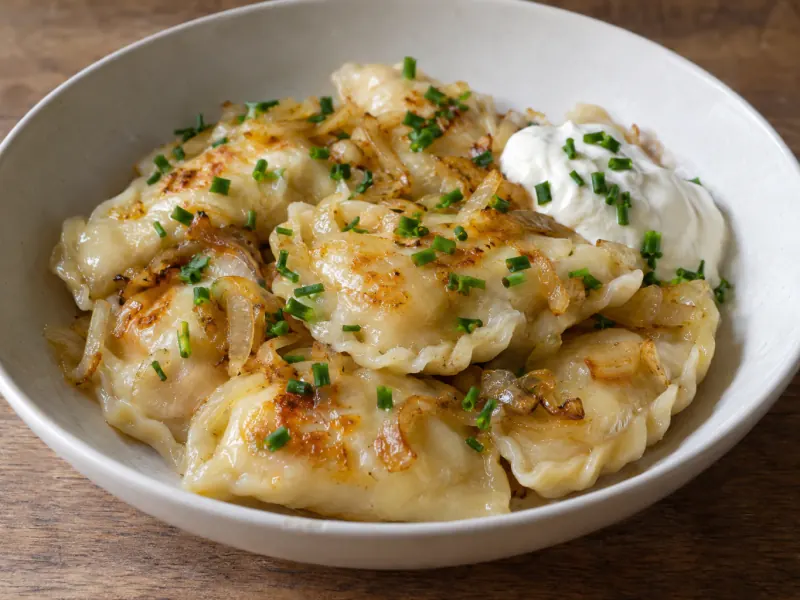
Lift each batch of potato varenyky out with a slotted spoon into a warm dish and toss with some of the remaining butter and the reserved fried onion, then scatter with dill. Serve the cherry ones separately with a spoonful of the drained juice, and put sour cream on the table for both.
Why this works
- About 260 ml water to 500 g flour gives a firm but pliable dough; wetter dough sticks to the cutter and tears, while drier dough cracks at the fold.
- The 30-minute rest relaxes the gluten so the dough rolls out thin without shrinking back.
- Sugaring and draining the sour cherries pulls out their juice before sealing; juice on the seam stops the dough from sticking, and those varenyky open in the pot.
- Seasoning the potato filling well matters because the bland dough needs a well-seasoned filling to carry the flavour.
Common mistakes
- Overfilling: more than a heaped teaspoon on a 7 cm circle leaves no clean margin to pinch, and the varenyk splits while boiling.
- Crowding the pot: too many at once drops the water off the boil and they stick together; cook about a dozen at a time.
- Leaving the edges thick: the doubled, pinched rim stays raw-tasting if the dough was rolled thickly, so roll it until you can just see the work surface through it.
Swaps
- farmer's cheese (tvorog) or dry curd cottage cheese → well-drained cottage cheese or ricotta. Hang cottage cheese in a cloth for an hour and press it through a sieve; with ricotta, use the drier deli kind.
- pitted sour cherries, fresh or frozen and thawed → jarred pitted morello cherries or blueberries. Drain jarred morellos very thoroughly; blueberries need only a light sprinkling of sugar.
- unsalted butter → rendered pork fat with crisp bits (shkvarky). Spoon over the potato varenyky in place of the butter at the end.
- large egg yolk → 1 tbsp semolina. Stir it into the cheese filling to help it hold together.
Storage
Cooked varenyky keep in a covered container in the fridge for up to 3 days; reheat by frying in a little butter until golden on both sides, or drop briefly into simmering water. Uncooked varenyky freeze well: freeze in a single layer on a floured tray, bag them once firm and use within 3 months.
Scaling
To halve (about 45–50 varenyky), use 250 g flour and 130 ml water and make just one filling; filling and sealing then takes about 25–30 minutes and boiling 4 batches about 25 minutes. When doubling, mix and rest the dough in two batches so it stays manageable, and keep cooking in batches of about a dozen in the same pot rather than overloading it.
Make ahead
Both fillings can be made a day ahead and kept in the fridge; drain the cherries again before using. Shaped varenyky can sit covered on a floured tray in the fridge for a few hours, or be frozen raw and boiled straight from frozen, adding 2–3 minutes after they float.
Nutrition per serving
- Calories
- 780 kcal
- Protein
- 17 g
- Carbohydrates
- 107 g
- Sugars
- 19 g
- Fibre
- 5 g
- Fat
- 32 g
- Saturated fat
- 15.5 g
- Sodium
- 1910 mg
Estimated from the raw ingredients using USDA FoodData Central values; actual values vary with brands and portion size. Salt added to taste is not included. Salt in drained cooking water is not included.
Contains
- Gluten
- Milk
- Egg
Derived from the ingredient list. Always check the labels of the products you buy. Allergens and health
Questions
What is the difference between varenyky and pierogi?
Sources disagree: some say varenyky have thinner, softer dough and simpler fillings, while others treat the two names as the same dumpling. This recipe follows the thin-dough approach, and in parts of western Ukraine the dish itself is called pyrohy.
Why did my varenyky open while boiling?
Usually the edges had flour, filling or cherry juice on them, or air was trapped inside. Brush off excess flour, keep the rim clean, press the air out before pinching, and if a circle has dried out, dab the edge with a little water.
Can I cook them from frozen?
Yes. Do not thaw them; drop them straight into boiling salted water, stir gently and cook 2–3 minutes longer after they float than you would for fresh ones.
Cook next
Published November 20, 2026 · Updated · Published by Recipe Worldwide · How we make recipes