Side dishesBrazilian
Farofa (Brazilian Toasted Cassava Flour with Bacon)
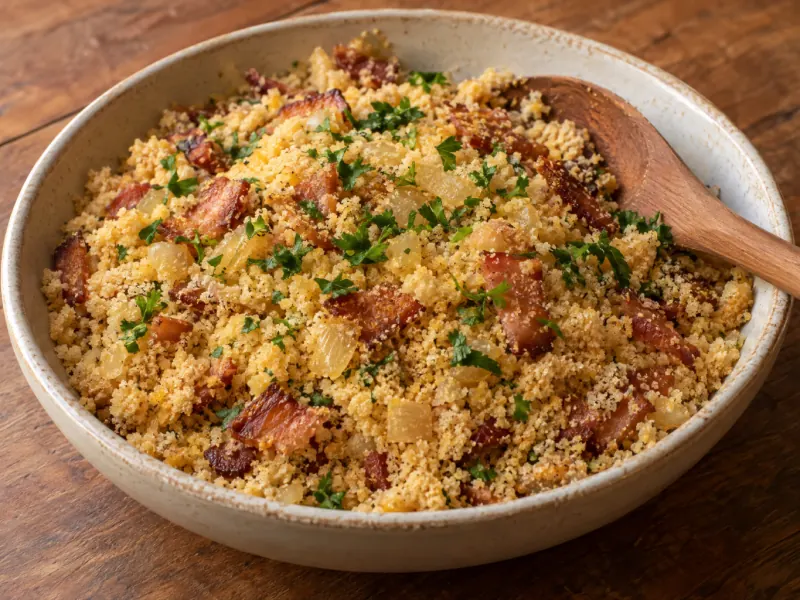
Farofa (fah-RAW-fah) is cassava flour toasted in fat until it turns golden and crunchy, served in Brazil alongside churrasco and feijoada. This version renders bacon first, adds butter and onion, then toasts the flour slowly so every grain is coated and evenly browned.
- Total32 min
- Servings6
- DifficultyEasy
Ingredients
Method
Render the bacon
Put the bacon in a wide frying pan, about 11 in (28 cm) across, and set it over medium heat. Cook for 6–8 minutes, stirring now and then, until the fat has melted out and the pieces are browned.
Look for: The bacon is golden and crisp at the edges and sits in a layer of clear fat.
Soften the onion
Add the butter to the bacon fat. When it has melted and stops foaming, add the onion and cook, stirring, for 4–5 minutes.
Look for: The onion is soft, translucent and starting to turn golden at the edges.
Add the cassava flour
Lower the heat to medium-low. Sprinkle in the cassava flour a handful at a time, stirring after each addition so the fat coats the grains instead of forming wet clumps.
Look for: The flour looks evenly damp with fat, with no dry white patches left.
Toast until golden
Keep stirring and scraping the bottom of the pan for 5–10 minutes, spreading the mixture out so it browns evenly; go by the colour and texture rather than the timer. If you're using pre-toasted farinha de mandioca torrada, 2–3 minutes is enough, just until it absorbs the fat and smells toasty. Pull the pan off the heat as soon as it reaches an even light gold, because the flour keeps darkening from the heat of the pan.
Look for: The grains turn from white to light gold, feel dry and sandy when stirred, and smell nutty rather than raw or burnt.
Season and serve
Season with the salt and pepper, tasting first because the saltiness of bacon varies. Stir in the parsley and serve warm or at room temperature with grilled meat, rice and beans, or a bean stew.
Why this works
- Rendering the bacon from a cool pan first gives smoky fat that seasons the cassava flour; the butter is added afterwards so it does not burn during the long bacon cook.
- The 60 g butter plus the fat rendered from the bacon is enough to coat 250 g cassava flour lightly; with much less fat the flour toasts unevenly and stays powdery, with much more it turns greasy.
- Medium-low heat during toasting matters because cassava flour goes from pale to scorched quickly; slow, constant stirring gives the grains time to dry out and brown evenly instead of catching on the bottom of the pan.
Common mistakes
- Adding all the cassava flour at once creates greasy clumps and dry patches; sprinkle it in gradually and stir between additions.
- Walking away from the pan during toasting: the flour can burn within a minute, and burnt farofa tastes bitter, so keep stirring and take it off the heat at light gold.
- Using fine gluten-free baking cassava flour instead of coarse Brazilian farinha de mandioca: it works in a pinch but gives a finer, less crunchy farofa, so look for the coarser product labelled farinha de mandioca or manioc flour.
Swaps
- Cassava flour (farinha de mandioca crua, coarse Brazilian manioc flour) → Brazilian farinha de milho (flaked corn flour) or fine cornmeal. Corn-based farofa is a known variant; it browns faster, so cut the toasting time and watch the colour.
- Thick-cut smoked bacon (streaky bacon or lardons in the UK/Australia) → Diced smoked sausage such as linguiça or cured Spanish-style chorizo. Brown it the same way; if it releases little fat, add an extra tablespoon of butter.
- Unsalted butter → Olive oil or vegetable oil. Use the same weight; the farofa will be less rich but just as crisp.
Storage
Cool completely, then keep in an airtight container in the fridge for up to 4 days because of the bacon. Re-crisp in a dry frying pan over medium-low heat for 2–3 minutes, stirring; it does not need freezing and loses crunch when frozen.
Scaling
To double it, use a larger pan, about {{l:32}} across, or toast in two batches; a crowded pan gives a deep layer that toasts unevenly and stays pale and soft. Toasting time rises by only a few minutes. Halving works in the same pan with slightly shorter times.
Make ahead
Farofa can be made up to 3–4 days ahead and kept covered in the fridge; re-crisp it in a dry pan before serving to restore the crunch.
Nutrition per serving
Nutrition is not shown because it could not be calculated reliably from the ingredients.
Contains
- Gluten
- Milk
- Celery
Derived from the ingredient list. Always check the labels of the products you buy. Allergens and health
Questions
Why is my farofa soggy instead of crunchy?
Soggy farofa is under-toasted: the flour was not cooked long enough, or the onion's moisture was not cooked off before the flour went in. Return it to a dry pan over medium-low heat and stir until the grains feel sandy. If it tastes greasy rather than soggy, there was too much fat for the amount of flour.
Can I use tapioca flour or tapioca starch?
No. Tapioca starch is a fine, refined starch rather than the coarse flour made from the whole grated root, so it will not toast into separate crunchy grains.
What do you serve farofa with?
In Brazil it's spooned over grilled meats such as churrasco, over feijoada, and over everyday rice and beans, where it adds crunch and soaks up the juices.
Cook next
Published November 20, 2026 · Updated · Published by Recipe Worldwide · How we make recipes